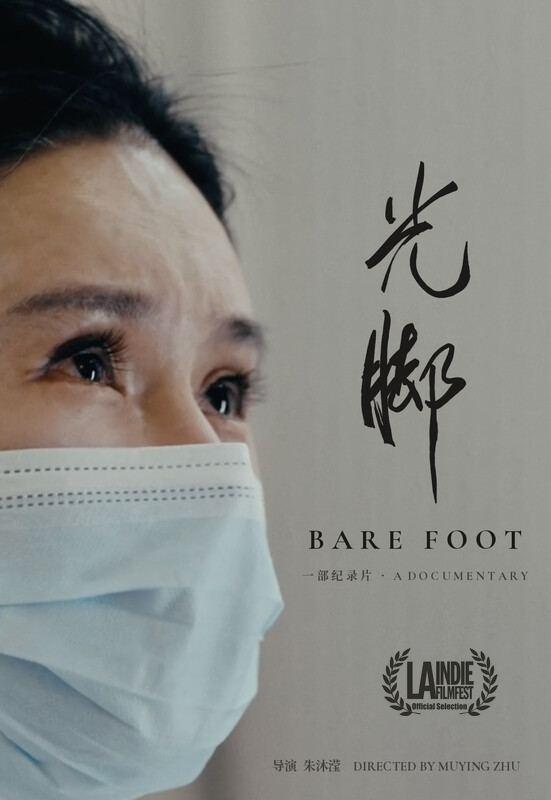
BARE FOOT
What happens when a name becomes a sentence? Bare Foot follows one woman as she walks out from under the word “laolai.”
Watch the trailer.
A first look at Bare Foot.
A documentary by Muying “Cathy” Zhu
Shanghai / Wellesley, Massachusetts
Official Selection
28th LA Indie Film Festival
- Date
- Saturday, November 14, 2026
- Time
- 5:00 pm, Shorts Program 2
- Venue
- Let Live Theater
916 N. Formosa Ave., Los Angeles, CA 90046 - Tickets
- $15 online, $17 at the door (Venmo or cash)
Followed by a Q&A with the filmmakers in attendance.
Buy tickets on FilmFreewayA label is never the whole story.
In China, they are called — deadbeats, blacklisted by the courts.
But a court record is a single frame. Zhou is a mother, a friend, and a woman still moving forward after everything that could hold her up has been taken away.
Zhou was detained wrongfully, betrayed by her best friend, abandoned by her husband and parents, and left to fight her way back for the sake of her two children.
This film stays close to her voice. It asks what we lose when a public label is allowed to stand in for a private life.
noun · a person listed by the courts as a judgment defaulter. In everyday speech, a word loaded with contempt.
The distance between a word and a woman.
Three years ago, at a family dinner, I heard my father, a lawyer, describe a case involving a “laolai,” a debtor blacklisted by the courts. It was the first time I’d heard the word, and I remember exactly what I felt: an unexamined contempt. In my mind, they were people who cheated and simply refused to pay. This is the prevailing attitude in Chinese society: laolai deserve to be shamed.
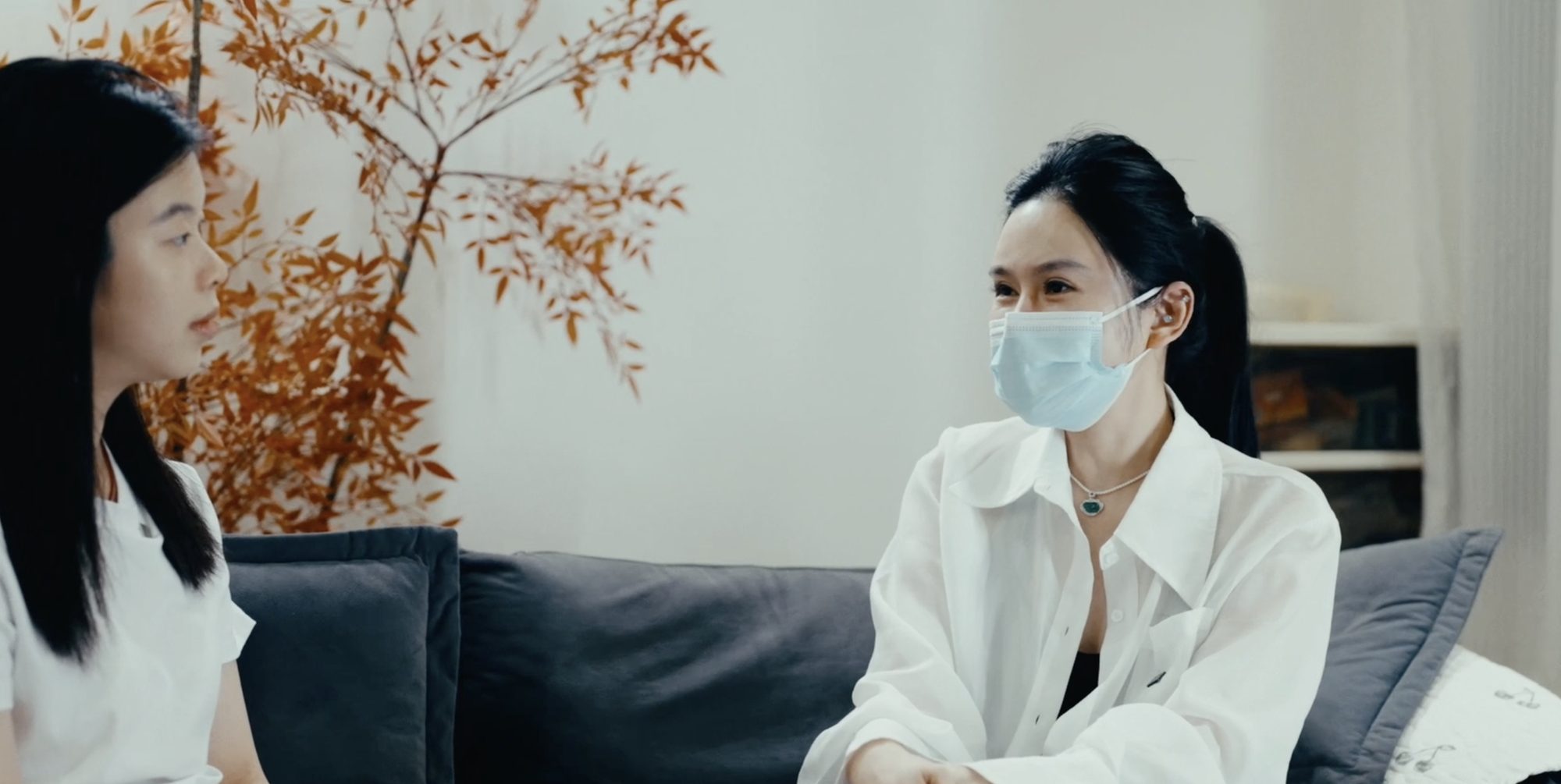
A year later, I sat across from Zhou in an office and interviewed her. She had once lived in Lujiazui, two kilometers from the Oriental Pearl Tower; now she was officially blacklisted as a judgment defaulter. But her downfall began not with dishonesty; it began with trust: a best friend who led her into a predatory scheme, a husband who fled with the evidence that could clear her, parents whose bags were already packed when she came home from detention.
One image from her story never left me. On the day of her release, having given her shoes away to the women still inside, she walked out of the detention center barefoot—no phone, no money, borrowing a stranger’s cell on the street to call a cab. Stripped of everything, she was still walking forward. That image gave this film its title. In Chinese, we say 光脚的不怕穿鞋的: the barefoot fear not those who wear shoes.
A year after that first interview, I went back and asked to film a documentary about her. I wanted to record the distance between the word “laolai” and the woman I had come to know, and to let her speak with as little interference as possible, because her voice was what the label had erased.
I began with a word I thought I understood. I finished believing that no label can hold a person.
— Muying “Cathy” Zhu, director
Muying “Cathy” Zhu
朱沐滢

Muying “Cathy” Zhu is a writer and director from Shanghai, currently a senior at Dana Hall School in Wellesley, Massachusetts. She first tried directing as a sophomore, as student director of her school’s winter play, and has since served as artistic director of a spring play and music director of two fall productions. In the summer before her senior year, she brought her love of directing to a new medium: documentary, which she believes can be an avenue for authentic representation. Bare Foot, her debut documentary, grew out of two years of research on judgment defaulters in China. It lets one woman, Zhou, speak in her own voice rather than through the label attached to her.